Want to be in the loop?
subscribe to
our notification
Business News
INDUSTRY, TRADE SECTOR BOASTS OPTIMISTIC RESULTS IN 2015
Industrial production increased impressively to contribute to the overall economic growth. The index of industrial production increased 9.8 per cent, much higher than the growth in the previous year and 2 percentage points higher than the target (7.8 per cent). Processing and manufacturing sectors expanded 10.6 per cent and led the overall industrial growth. In spite of numerous difficulties, mining sector managed to maintain stable performances. Mechanical engineering sector recovered to catch up with the overall trend.
Vietnam’s exports brought in estimated US$162.4 billion in 2015, an increase of about 8.1 per cent over 2014. 23 commodities brought home over US$1 billion of export revenue. The structure of Vietnam’s exported products positively changed and went in line with the roadmap and objectives of the import development strategy in the 2011-2020 period, with a vision to 2030.
The country’s total imports were estimated at US$165.6 billion in 2015, up 12 per cent against 2014. Imports importantly served domestic production. Vietnam saw a declining share of imported consumer goods and a rising share of fuels and materials for production. Trade deficit was effectively controlled in 2015, estimated to reach US$3.17 billion, equivalent to 2 per cent of exports.
Stable commodity supply and low input prices were positive factors to boost consumption. Compared with 2014, low inflation helped improve domestic consumption; inventories returned to normal levels; and total retail turnover of goods and services rose 9.5 per cent year on year.
Market management was aggressively deployed since the start of the year.
Vietnam made long strides in international economic integration in 2015 as it signed free trade agreements with the Eurasian Economic Union (EEU) and South Korea; and concluded FTA negotiations with the European Union (EU) and the Trans-Pacific Partnership (TPP). With these results, Vietnam had FTA ties with 55 economies across the world, including 17 G20 economies and all seven G7 economies.
In 2016, the trade and industry sector expected the industrial production value to grow 9-10 per cent, and exports to rise 10 per cent to US$178 billion. Trade deficit was expected to be kept below 5 per cent of exports. Total retail sales of goods and services increased 11.5 - 12 per cent.
At the review meeting of the industry and trade sector on December 31, Prime Minister Nguyen Tan Dung emphasised key tasks that the sector needed to carry out in the coming time. The sector needs to improve institutions, mechanisms, policies, strategies and plans to create favourable conditions for industrial and commercial fields to develop more strongly and more sustainably. This is extremely important as institutions are soft infrastructure and there will be no development without appropriate policies and mechanisms.
He also asked the industry and trade sector to constantly enhance industrial production capacity, promote trade and service development, boost supporting industrial development, and increase the localisation rate in industrial products and services. The sector also needs to grasp opportunities of and advantages of international integration achievements, especially from international economic integration; encourage and facilitate export development; focus on supporting businesses to expand exports like garment and textile, leather and footwear, wooden furniture, and agricultural and aquatic products; effectively control trade deficit and build technical barriers to protect production and domestic market in line with international commitments and practices.
PM Dung placed emphasis on domestic market development - a huge potential market with a population of over 90 million. “We have to win in our home market. I am pleased that over 90 per cent of goods at supermarkets are made-in-Vietnam.”
A major task that PM Dung addressed is the industry and trade sector will effectively restructure to enhance quality, efficiency and competitiveness and companies will reorganise to boost operational efficiency, labour productivity and governance capacity.
Source: VCCI
Related News
BANKING / FINANCE / INSURANCE / TAX
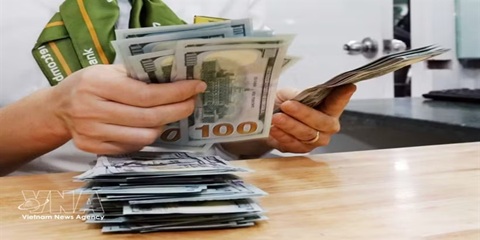
REMITTANCES TO HCM CITY RISE NEARLY 40% IN Q3
Remittances to HCM City reached more than US$2.83 billion in the third quarter of this year, up 39.5 per cent from the previous quarter and 3.6 per cent year-on-year. This was the first quarter showing positive annual growth this year, helping narrow the decline in remittance inflows over the first nine months. According to the State Bank of Vietnam (SBV)’s Regional Branch 2, remittances transferred to HCM City through credit institutions and economic organisations totalled $2.835 billion in Q3, an increase of more than $802 million from the previous quarter.
TECHNOLOGY
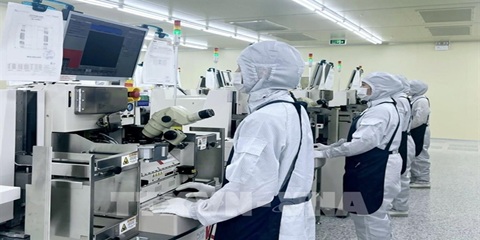
TECH SECTOR GROWTH OPENS UP OPPORTUNITIES FOR VIỆT NAM TO GO GLOBAL
The growth of the electronics, semiconductor and high-tech sectors worldwide is opening up a variety of opportunities for Vietnamese enterprises to integrate more deeply into the global supply chain. However, to become suppliers for these corporations, domestic enterprises must meet rigorous standards regarding quality, technology, productivity and order fulfilment capabilities.
VIETNAM ECONOMY INVESTMENT
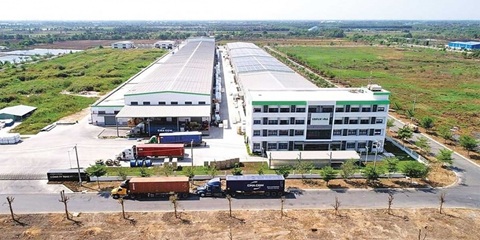
FOREIGN INVESTORS SEEKING A SYNCHRONISED MANUFACTURING ECOSYSTEM
Instead of focusing only on land costs and incentives as usual, foreign investors are seeking a synchronised manufacturing ecosystem, from stable power supply and logistics to shared infrastructure and the convenience of completing residence procedures for experts to serve their long-term investment in the country.
MEMBER CORNER / PROMOTIONS
SENTRYSAFE FHW40200 – PROTECT YOUR VALUABLES, ENJOY PEACE OF MIND!
Looking for a reliable solution to protect your important documents, cash, and valuables from fire and water damage? Genuine SENTRYSAFE - Reliable protection for your valuables and peace of mind! Contact Sen Wai Vietnam for more information and personalized product recommendations.
PROPERTY / INDUSTRIAL ZONE
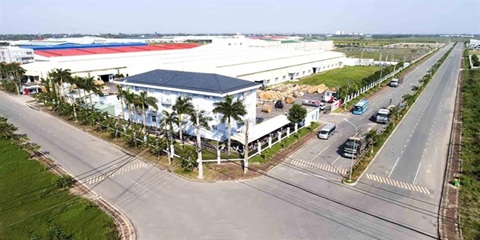
HCM CITY ATTRACTS US$5.7 BILLION INTO EXPORT PROCESSING AND INDUSTRIAL ZONES
HCM City attracted US$5.7 billion in domestic and foreign investment into its export processing and industrial zones during the first nine months of 2026. The figure exceeded the city's full-year target by 31 per cent, highlighting strong momentum in high-quality industrial investment under Resolution No.10-NQ/TW. Total investment reached 131 per cent of the 2026 target of $4.25 billion and represented a 29 per cent increase compared with the same period in 2025, according to the city's Export Processing and Industrial Zones Authority (HEPZA).
INFRASTRUCTURE / CONSTRUCTION / LOGISTIC / PORT
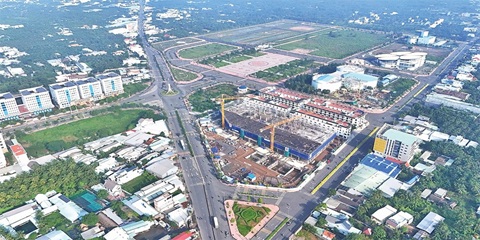
DONG THAP PROVINCE STEPS UP INDUSTRIAL EXPANSION AND INFRASTRUCTURE CONNECTIVITY
Accelerating public investment, strengthening inter-regional connectivity, and expanding industrial land are helping Dong Thap efficiently bolster competitiveness and drive economic growth. Following the 2025 merger of the former Dong Thap and Tien Giang provinces, the expanded Dong Thap province in the Mekong Delta faces mounting pressure to accelerate infrastructure development and strengthen connectivity among local economic zones, urban areas, industrial parks (IPs), and production centres.
Events Sponsors






















